← Back to all use cases Food service

Restaurants & cafés

Nobody can answer the phone during the dinner rush.

Pilot targetFewer missed orders, less waste
Project startDate agreed in scope
ValidationMeasured against baseline
What changes

From peak-hour demand to a measurable restaurant workflow.

Pilot targetFewer missed orders, less waste
01Today

The friction

Reservations and delivery questions arrive exactly when the team is busiest, social media goes quiet for weeks, purchasing is guesswork so food is wasted, and negative reviews sit unanswered.

02With HAY AI

The operating change

Support reservation enquiries and approved menu or order questions on the selected channels. Use booking and sales history to inform preparation and stock planning, while staff confirm availability, allergen information, purchasing and guest exceptions.

Best fit

Restaurants, cafés, bakeries and delivery kitchens.

Decision snapshot

Start with reservations and guest enquiries at one location.

Start with one workflow, measure it against the current baseline and expand only after the result is visible.

See a sample first pilot →
Best first pilotReservation & FAQ assistant for one restaurant location.
What we measureFirst response, reservation completion, handoff rate and no-shows/missed enquiries.
Human controlManagers control pricing, menu, food-safety and guest exceptions.
Scale ruleKeep, improve or stop the pilot based on evidence before expanding.
Smart Restaurants & cafés roadmap

From reservation to service, operations and return visit

Improve coordination and demand visibility while managers retain control of menu, pricing, food safety and guest exceptions.

What happens today
Reservations and delivery questions arrive exactly when the team is busiest, social media goes quiet for weeks, purchasing is guesswork so food is wasted, and negative reviews sit unanswered.
Roadmap

See the operating journey stage by stage.

Open each stage to see the problem, action, deliverable and KPI behind the workflow.

Restaurants & cafés roadmap

Stage 1 of 7

Demand & reservations

Better table utilisation and fewer no-shows
The problem at this stage

Reservations, walk-ins, delivery demand and special requests arrive through separate channels. Capacity is difficult to predict, no-shows are costly and the team cannot see demand by day, hour or service type.

Exactly what we do

Unify reservations and demand signals, forecast covers and order volume, optimise table availability, capture preferences and send timely confirmations and reminders with clear human escalation for exceptions.

What you receive

Reservation inbox, demand forecast, table-capacity view, preference profile, no-show alerts and confirmation workflow.

Opportunity map

Eight practical areas we can improve

See reservations, ordering, inventory signals and guest communication as connected restaurant workflows rather than separate point solutions.

1. Demand & reservations

Unify reservations and demand signals, forecast covers and order volume, optimise table availability, capture preferences and send timely confirmations and reminders with clear human escalation for exceptions.

2. Dining & kitchen operations

Connect order intake with kitchen and service workflows, prioritise tickets by promised time, show prep status, flag bottlenecks and give each station a clear next action.

3. Purchasing & inventory

Forecast ingredient demand from reservations, sales and menu mix, recommend purchase timing and quantities, track supplier performance, and alert the team to expiry or shortage risk.

4. Preparation & service

Provide approved digital prep and quality checklists, show station and table status, predict service pressure, route tasks to the right team and keep human approval for menu or safety exceptions.

5. Payment & delivery

Connect order, payment and delivery events, reconcile transactions, show order status, flag failed or delayed handoffs and send proactive updates to the customer and restaurant team.

6. Satisfaction & loyalty

Collect feedback after the visit or delivery, analyse themes, route unhappy guests to service recovery, personalise loyalty rewards and trigger relevant return offers with consent.

7. Cost & improvement

Create one restaurant performance view, connect cost and service metrics, analyse menu and shift performance, identify recurring losses and test one operational improvement at a time.

8. Continuous improvement

Bring service demand, completion, exceptions and inventory or guest signals into one recurring restaurant review so daily operating issues are visible sooner.

Choose your first pilotRecommended starting point

Reservation & FAQ assistant for one restaurant location.

Start with reservations and routine guest questions for one location. Connect the booking system and one enquiry channel, measure response and booking completion, then expand only after the workflow is stable.
What we build

  • Connect the booking tool and one primary enquiry channel
  • Prepare approved menu, hours, reservation rules and common guest questions
  • Build the reservation and FAQ assistant with human handoff for exceptions
  • Add confirmation, reminder and unanswered-enquiry tracking

How we measure it

  • First-response time
  • Reservation completion rate
  • Human-handoff and exception rate
  • No-show or missed-enquiry baseline versus pilot
Next expansion

What to add after the pilot

After the reservation pilot is working, add demand, kitchen, inventory or loyalty workflows one at a time instead of bundling them into the first pilot.

Demand & inventory planning

Use reservation and sales history to forecast demand, support purchasing and flag shortage or expiry risk.

Dining & kitchen operations

Add order routing, prep-time signals, rush-period alerts and shift handoff support.

Marketing, loyalty & guest follow-up

Add approved promotions, review follow-up and loyalty workflows as a separate customer-retention expansion.

Why this works

Practical before ambitious.

We begin with one daily operating bottleneck, keep managers and staff responsible for exceptions and expand only after the first workflow proves useful during real service.

Current methodBaselineMinimum systemsHuman approvalScale after proof
AI in action

See how one guest or planning signal becomes an owned action

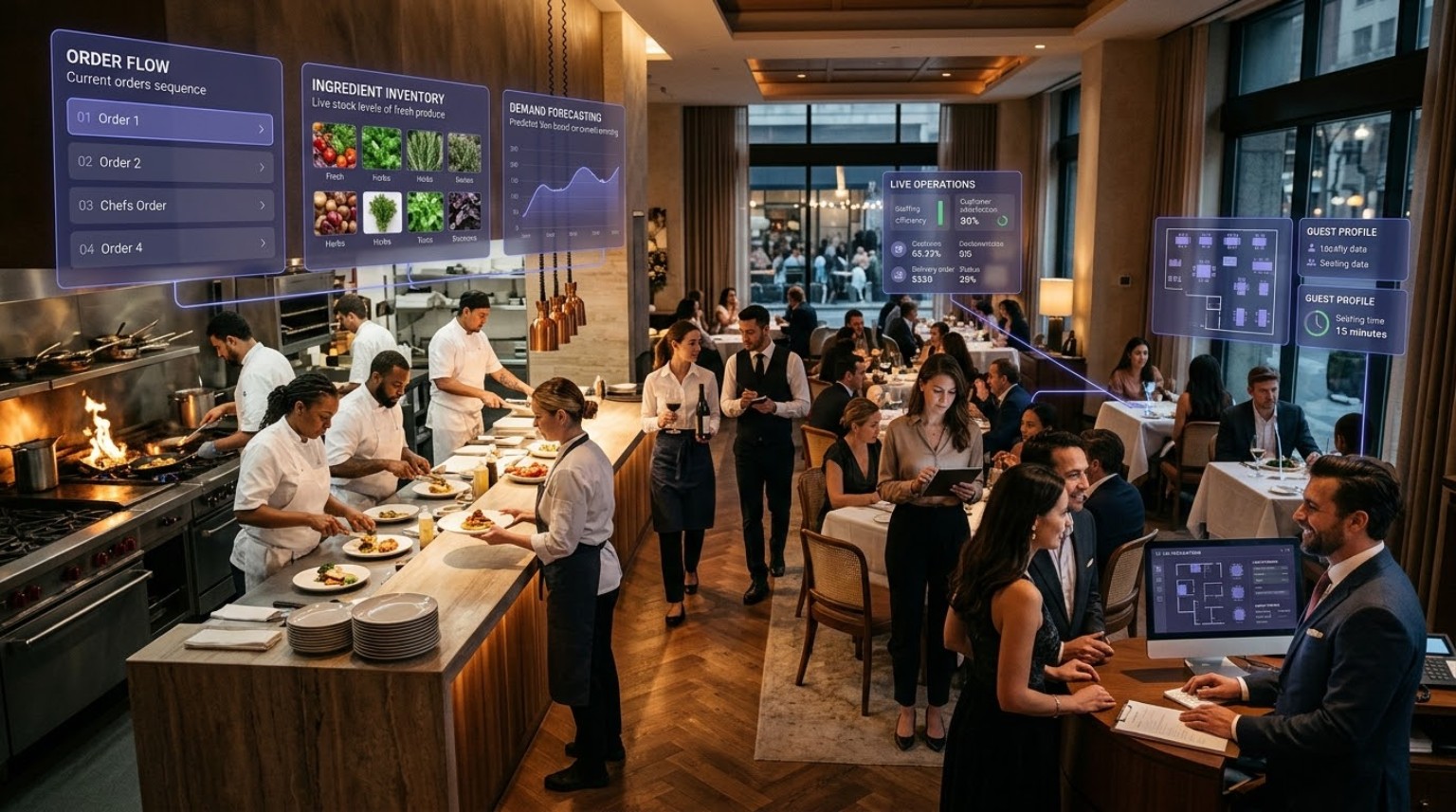
Connect reservations, order flow and stock signals so staff can prepare for demand and focus on guests.
Premium restaurant and café scene with dining room, open kitchen, host stand, live operations, ingredient inventory and demand forecasting support

Why this approach works for Restaurants & cafés

Start small, then connect

Choose one reservation, ordering, inventory or guest-service workflow and one measurable target first. Expand only after managers and staff accept the process and result.

Keep people in control

Managers control pricing, menu, food-safety and guest exceptions.

Use the tools already in place

Connect the reservation, POS, inventory, delivery and messaging tools already in use instead of replacing the restaurant stack.

Measure business outcomes

Review the agreed measures: Table utilisation, response time, waste and repeat visits. Use these to assess business outcomes and decide the next step.

Restaurants & cafés project process

1. DiscoveryInterview the owner, process lead and people who do the work today.
2. BaselineMeasure time, volume, quality, cost, delays or missed opportunities.
3. Build the pilotConfigure one focused workflow and connect only the data required for the first result.
4. MeasureCompare the pilot with the baseline and review adoption, quality and risk.
5. Decide and scaleKeep, improve or stop the pilot based on evidence, then connect the next stage.
6. Improve regularlyTurn the connected reporting into a recurring operating rhythm for the team.

Suggested start: one workflow can go live first; the next measurable improvement is added only after the first review.

Information we need

  • Current workflow, owner and handoffs
  • Three to six months of relevant examples, records or messages
  • The systems, files, channels and approvals involved
  • Current baseline for Table utilisation, response time, waste and repeat visits.
  • The person responsible for exceptions and final decisions

Initial diagnostic questions

  • What is the biggest restaurants & cafés bottleneck today?
  • How often did it happen last month?
  • What do missed bookings, order friction, waste, stock gaps or repetitive guest questions cost today?
  • Which system or data already records the problem?
  • Can the first pilot run at one location, service period, channel or operating workflow?

Not sure which one fits you?

Book a free 30-minute discovery call. We will identify which use case is worth testing first and what evidence should decide the next step.

Book a free 30-minute discovery call

Other areas we automate

Contact us

Have a question about this page?

Send us the workflow, problem or idea you want to discuss. We’ll reply within one business day.

HAY AI Assistant

English · Հայերեն · العربية · Русский · Español