← Back to all use cases Construction

Construction & real estate development

Many expensive project problems start long before they reach the site.

Pilot targetEarlier visibility into project risk
Project startDate agreed in scope
ValidationMeasured against baseline
What changes

From project documents to measurable delivery visibility.

Pilot targetEarlier visibility into project risk
01Today

The friction

Tenders, drawings, bills of quantities and change orders arrive as hundreds of pages. Site reports come late and inconsistent, cost overruns are noticed after the money is spent, and sales teams chase unqualified buyers.

02With HAY AI

The operating change

Extract and organise tender, BOQ and change-order information, prepare traceable progress summaries and flag potential cost or schedule deviations. Engineers and project managers validate quantities, technical decisions and contractual commitments.

Best fit

Contractors, developers and engineering firms.

Decision snapshot

Start with one project and one document-heavy decision.

Start with one workflow, measure it against the current baseline and expand only after the result is visible.

See a sample first pilot →
Best first pilotAutomated progress reporting for one project.
What we measureReport preparation time, Required-field completeness, Corrections needed before approval, Time from site update to management visibility.
Human controlProject managers approve cost, safety and schedule decisions.
Scale ruleKeep, improve or stop the pilot based on evidence before expanding.
Smart Construction & real estate development roadmap

From opportunity and design to delivery and project improvement

Surface project risk earlier while project managers and engineers retain authority over safety, cost and schedule.

What happens today
Tenders, drawings, bills of quantities and change orders arrive as hundreds of pages. Site reports come late and inconsistent, cost overruns are noticed after the money is spent, and sales teams chase unqualified buyers.
Roadmap

See the operating journey stage by stage.

Open each stage to see the problem, action, deliverable and KPI behind the workflow.

Construction & real estate development roadmap

Stage 1 of 7

Opportunity & feasibility

Better project selection with fewer early surprises
The problem at this stage

Site, market, zoning, access, demand and financial assumptions sit in separate files. Teams commit to a project before constraints, feasibility risks or the realistic return are visible in one decision view.

Exactly what we do

Combine location, market, planning, cost and demand evidence, identify site constraints, compare development scenarios and produce an explainable feasibility brief before the investment decision.

What you receive

Opportunity map, market and demand analysis, constraint register, feasibility scenarios, risk assumptions and an investment decision brief.

Opportunity map

Eight practical areas we can improve

See planning, procurement, cost control and site reporting as one connected delivery system, with each handoff tied to the project evidence teams already use.

1. Opportunity & feasibility

Combine location, market, planning, cost and demand evidence, identify site constraints, compare development scenarios and produce an explainable feasibility brief before the investment decision.

2. Design & permitting

Organise design documents by version, compare revisions, extract requirements, track permit dependencies and route technical or regulatory questions to the right professional for approval.

3. Budgeting & procurement

Extract and structure BOQ and estimate data, compare supplier bids, track commitments against the approved budget, flag price or scope variance and route procurement decisions for approval.

4. Execution & construction

Connect schedule, site updates, photos, tasks and issue records, summarise daily progress, flag schedule risk and recommend the next action while keeping the project manager in control.

5. Quality & safety

Digitise quality and safety checklists, analyse site photos or inspection records where appropriate, flag missing controls and near misses, and route corrective actions to a named owner with a deadline.

6. Sales & delivery

Qualify buyer enquiries, match requirements to available units, keep pricing and availability controlled, track payments and milestones, and send approved updates through to handover.

7. Profitability & improvement

Create one development performance view, track cost-to-complete and profitability, connect delivery and sales outcomes, identify recurring losses and run a documented post-project improvement cycle.

8. Continuous improvement

Bring schedule, cost, procurement and progress signals into one recurring project review so exceptions have a clear owner and next action.

Choose your first pilotRecommended starting point

Automated progress reporting for one project.

Start with one active project and one reporting cycle. Use approved site records and project data to produce a consistent progress report, then compare preparation time and review corrections with the current method.
What we build

  • Define one project, reporting period, template and responsible reviewer
  • Connect the approved site diary, progress photos, schedule updates and issue records needed for that report
  • Generate a structured progress-report draft with source references and flagged missing information
  • Add project-manager review, corrections and final approval before release

How we measure it

  • Report preparation time
  • Required-field completeness
  • Corrections needed before approval
  • Time from site update to management visibility
Next expansion

What to add after the pilot

After the progress-reporting pilot is stable, add one project-control capability at a time.

Tender & BOQ analysis

Run document extraction and comparison as a separate workflow with estimator or engineer review.

Cost & schedule risk

Add variance and early-warning analysis after reporting data is consistent.

Procurement & change control

Connect procurement, change orders and approval evidence as a later project-control expansion.

Why this works

Practical before ambitious.

We begin with one measurable project bottleneck, keep engineers and project leaders in control, and expand only after the first workflow proves it can improve visibility or response time.

Current methodBaselineMinimum systemsHuman approvalScale after proof
AI in action

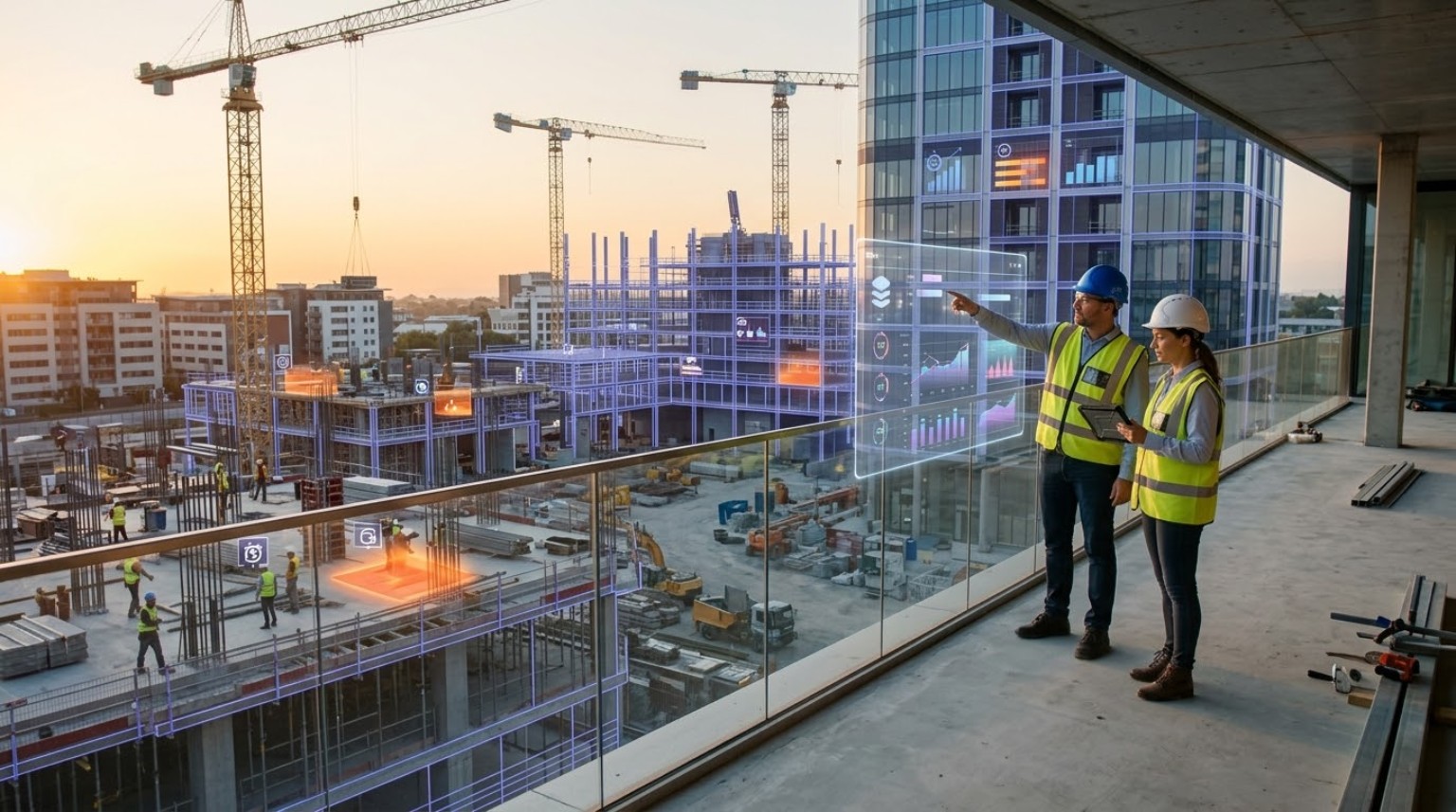
See how one project signal becomes a reviewed delivery decision

Bring planning, progress and cost signals into one review workflow so project managers can spot gaps and coordinate the next step.
Construction and real estate development team reviewing project progress, site analytics, and digital planning overlays from an active building site

Why this approach works for Construction & real estate development

Start small, then connect

Choose one project-control workflow and one measurable target first. Expand only after the project team accepts the process and the schedule, cost or reporting evidence is visible.

Keep people in control

Project managers approve cost, safety and schedule decisions.

Use the tools already in place

Connect the project-management system, BIM or document store, spreadsheets and approval channels already in use instead of replacing the delivery stack.

Measure business outcomes

Review the agreed measures: Reporting time, variance visibility, rework and delay risk. Use these to assess business outcomes and decide the next step.

Construction & real estate development project process

1. DiscoveryInterview the owner, process lead and people who do the work today.
2. BaselineMeasure time, volume, quality, cost, delays or missed opportunities.
3. Build the pilotConfigure one focused workflow and connect only the data required for the first result.
4. MeasureCompare the pilot with the baseline and review adoption, quality and risk.
5. Decide and scaleKeep, improve or stop the pilot based on evidence, then connect the next stage.
6. Improve regularlyTurn the connected reporting into a recurring operating rhythm for the team.

Suggested start: one workflow can go live first; the next measurable improvement is added only after the first review.

Information we need

  • Current workflow, owner and handoffs
  • Three to six months of relevant examples, records or messages
  • The systems, files, channels and approvals involved
  • Current baseline for Reporting time, variance visibility, rework and delay risk.
  • The person responsible for exceptions and final decisions

Initial diagnostic questions

  • What is the biggest construction & real estate development bottleneck today?
  • How often did it happen last month?
  • What do delays, rework, reporting effort or procurement friction cost today?
  • Which system or data already records the problem?
  • Can the first pilot run on one project, site team or control workflow?

Not sure which one fits you?

Book a free 30-minute discovery call. We will identify which use case is worth testing first and what evidence should decide the next step.

Book a free 30-minute discovery call

Other areas we automate

Contact us

Have a question about this page?

Send us the workflow, problem or idea you want to discuss. We’ll reply within one business day.

HAY AI Assistant

English · Հայերեն · العربية · Русский · Español